
Science
Our relentless focus on understanding and addressing unmet medical needs has resulted in transformative innovations that aim to make a real difference in patients’ lives


A novel neuroprotective approach to treat optic neuropathies and retinal diseases
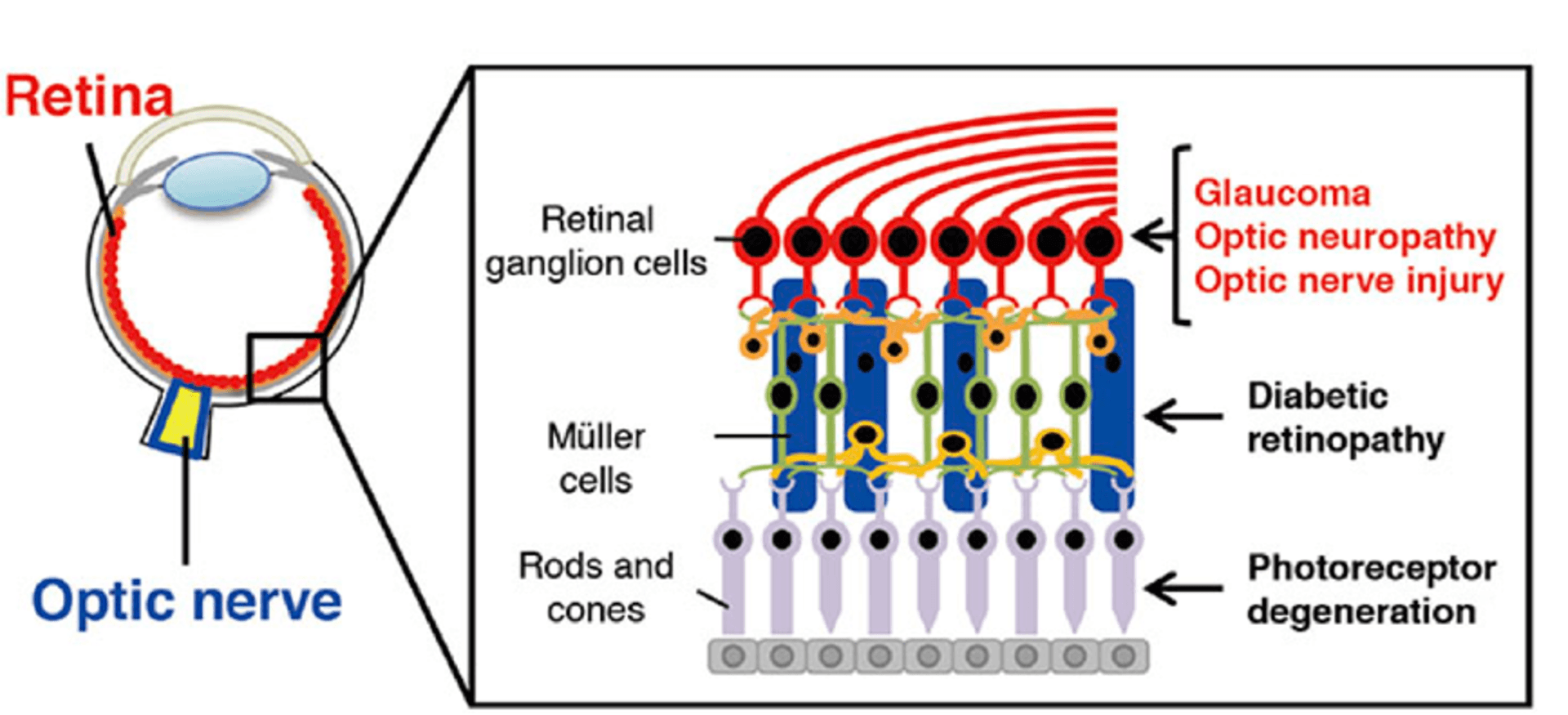
OPTIC NEUROPATHIES AND RETINAL NEURODEGENERATION DISEASES SHARE COMMON FEATURES
because the cellular and molecular responses to neurodegeneration (inflammation, oxidative stress, apoptosis) are similar.1
THE AIM OF NEUROPROTECTION
is to increase retinal neuronal survival and preserve visual function, to fulfil unmet medical needs across multiple retinal diseases and optic neuropathies.
Illustration of the retina2
Privosegtor is a novel peptoid small molecule that crosses the blood brain and retinal barriers, with the potential to become the first neuroprotective therapy for optic neuropathies and other neuro-ophthalmic diseases.
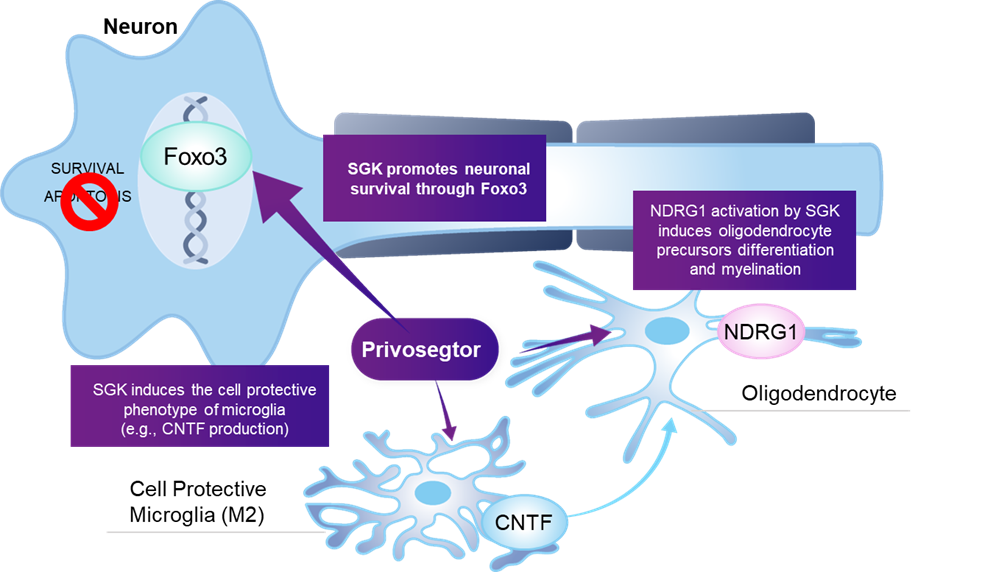
Privosegtor was selected by high-throughput screening (HTS) for its unique ability to promote neuro-axonal survival, validated across multiple in vitro injury models: apoptosis, oxidation, and inflammation.
Its effect on neuro-axonal survival was also confirmed in vivo in glaucoma, multiple sclerosis (MS), and optic neuritis models.
Privosegtor
is being developed as a potential neuroprotective drug to protect neurons affected in neuro-ophthalmic diseases.
Explore Privosegtor as a potential neuroprotective treatment for optic neuritis and non-arteritic anterior ischemic optic neuropathy (NAION).
Innovative antibody fragment technology enabling the development of potentially the first anti-TNFα biologic eye drop to treat inflammatory eye diseases
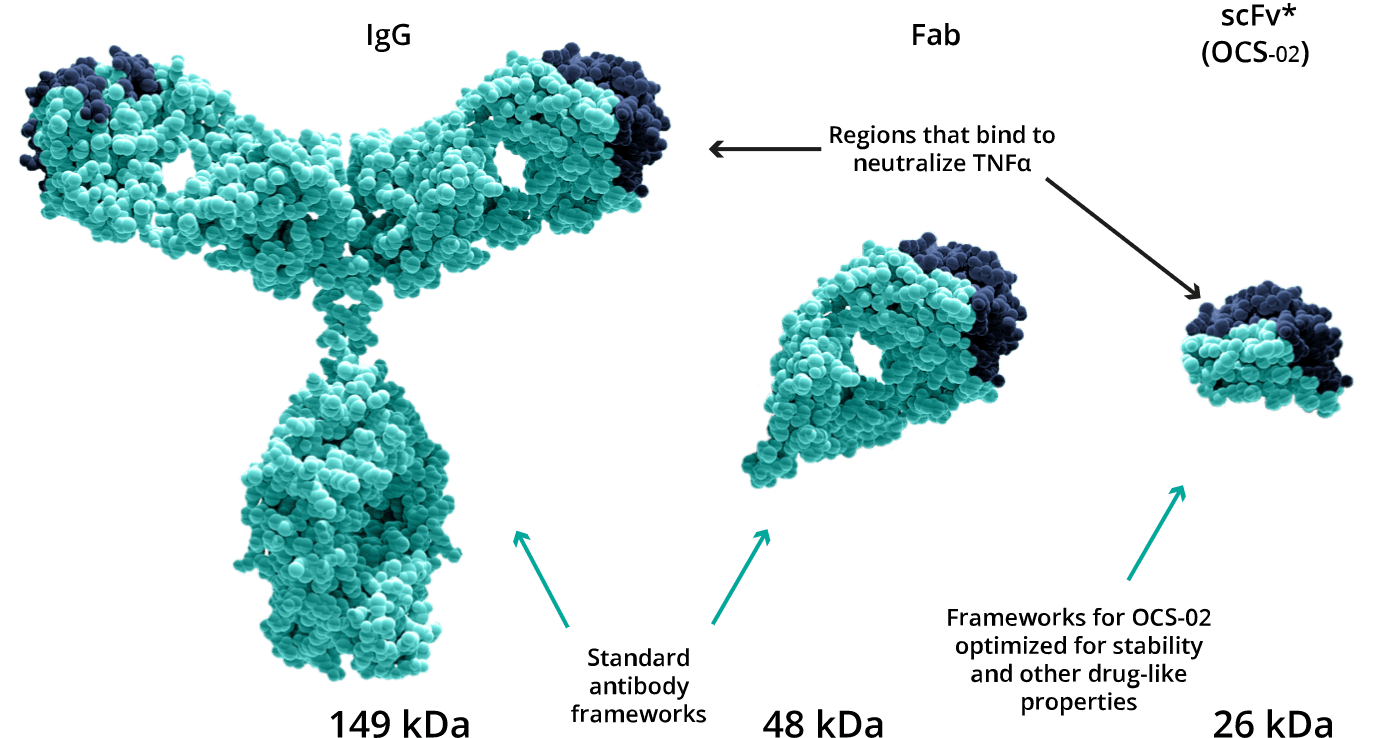
The unique antibody fragment technology allows for the development of a small, pharmacologically active, humanized single chain variable fragment antibody (scFv). The lower molecular weight of the fragment relative to the whole antibody enables the development of a higher formulation concentration enhancing its penetration into ocular tissues. These characteristics make scFv more suitable than full-length antibodies for the topical treatment of ocular surface diseases, such as dry eye disease (DED).
Licaminlimab is an anti-TNFα antibody fragment formulation which binds to and neutralizes the activity of human TNFα. It has the potential to become the first anti-TNFα biologic eye drop to treat ocular inflammation.
CLINICALLY PROVEN MODE OF ACTION (MOA)
With their proven anti-inflammatory and anti-apoptotic dual mechanism of action, anti-TNFα agents have been approved as systemic treatments for several inflammatory diseases and with transformative impact on other therapeutic areas.
ENHANCED OCULAR PENETRATION
Lower molecular weight allows for higher concentration and enhanced ocular tissue penetration.
PROPRIETARY GENETIC BIOMARKER
Predictive and pronounced response of Licaminlimab in patients with TNFR1-related biomarker highlights potential opportunity to transform the treatment paradigm of DED with a precision medicine approach.
Licaminlimab
an anti-TNFα eye drop candidate, could transform the treatment paradigm of DED with a precision medicine approach.
Find out more about Licaminlimab and its potential as the first anti-TNFα biologic eye drop to treat DED.